12 Dere Types Explained: Complete Anime Archetype Chart
Compare all 12 anime dere types—from Tsundere, Yandere, Kuudere, and Dandere to Deredere, Himedere, Sadodere, and Mayadere—with Japanese word roots, 4-axis coordinates, and iconic character examples.
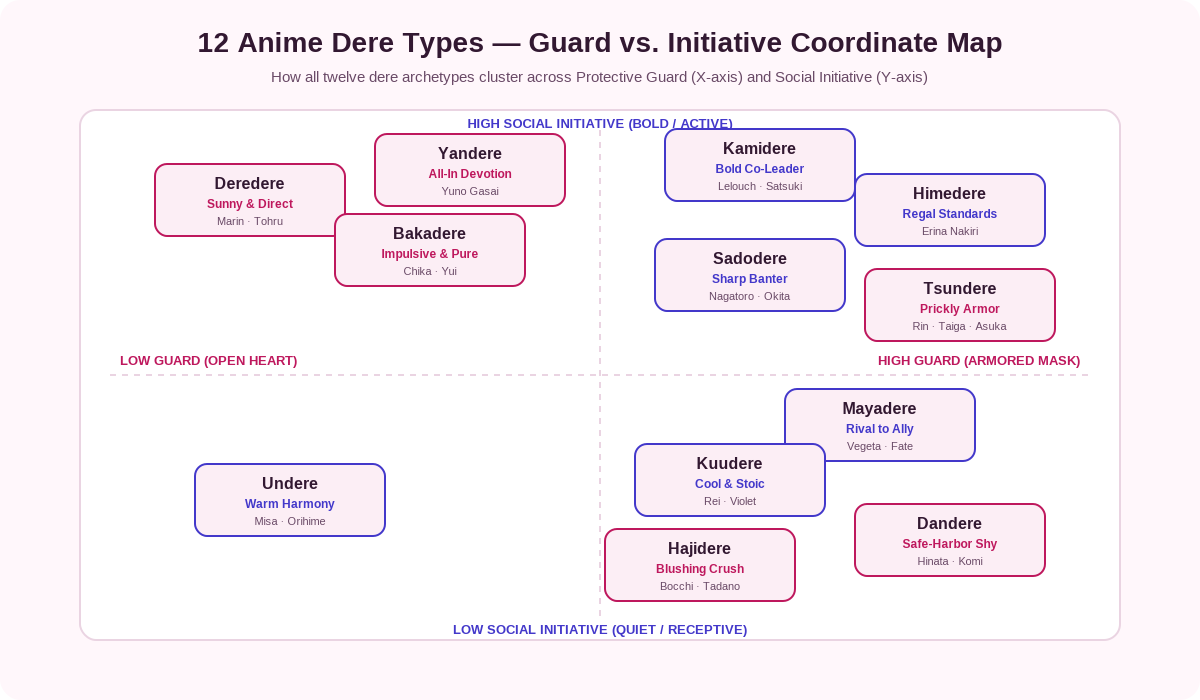
Understanding the Japanese Word Roots Behind Anime Dere Types
Every label in the dere types family combines a Japanese descriptive root with deredere (デレデレ, lovestruck warmth). That two-layer wordplay is why anime dere types map so cleanly onto personality quizzes: the prefix describes your outer social armor in public, while the dere half reveals how your affection emerges once a crush or close bond becomes real.
Use the complete 12 dere types reference chart below to compare Japanese origins, first impressions, inner romance habits, and iconic anime character benchmarks side by side.
| Archetype | Japanese Root | Outer Mask | Inner Affection Style | Iconic Anime Characters |
|---|---|---|---|---|
| Tsundere | Tsuntsun (prickly, aloof) | Sarcastic, stubborn, quick to deny | Practical favors, fierce loyalty | Rin Tohsaka, Taiga Aisaka, Kurisu Makise |
| Yandere | Yanderu (emotionally consumed) | Sweet, attentive, devoted | Exclusive priority, sharp jealousy | Yuno Gasai, Satou Matsuzaka, Himiko Toga |
| Kuudere | Kuru (cool, collected) | Stoic, deadpan, unshakeable | Quiet problem-solver, rare soft smile | Rei Ayanami, Violet Evergarden, Frieren |
| Dandere | Danmari (silent, taciturn) | Shy, quiet, avoids group spotlights | Talkative, warm, imaginative one-on-one | Hinata Hyuga, Shoko Komi, Sawako Kuronuma |
| Deredere | Deredere (lovestruck) | Sunny, energetic, welcoming | Zero mind games, open praise | Marin Kitagawa, Tohru Honda, Mitsuri Kanroji |
| Himedere | Hime (princess / royal) | Regal standards, poised pride | Spoils chosen inner-circle favorites | Erina Nakiri, Mio Aoyama, Beatrice |
| Kamidere | Kami (godlike confidence) | Commanding, ambitious leader | Treats respected partner as co-captain | Lelouch Lamperouge, Satsuki Kiryuin |
| Bakadere | Baka (goofy, impulsive) | Clumsy timing, zero filter | Pure-hearted, 100% transparent care | Chika Fujiwara, Yui Hirasawa, Catarina Claes |
| Sadodere | Sado (teasing, provocative) | Playful smirk, sharp banter | Uses teasing to test real chemistry | Hayase Nagatoro, Sogo Okita, Kurumi Tokisaki |
| Mayadere | Rival-to-ally trope | Competitive, skeptical challenger | Ride-or-die protector after earned respect | Vegeta, Fate Testarossa, Esdeath |
| Undere | Un (enthusiastic "yes!") | Agreeable, gentle, accommodating | Mirrors hobbies to stay close in harmony | Orihime Inoue, Misa Amane, Ruka Sarashina |
| Hajidere | Haji (blushing embarrassment) | Normal until romance appears | Blushing panic, earnest rewritten texts | Hitori "Bocchi" Gotoh, Wakana Gojo |
Deep Dive Into the Classic Big Four Dere Types
1. Tsundere: Prickly Pride Guarding a Soft Core
Among all dere types, a Tsundere struggles most with feeling emotionally exposed. Saying "I waited twenty minutes so we could walk together" feels dangerously bare, so it comes out as "We literally take the same train—do not flatter yourself!" Classic anime popularized explosive slapstick Tsunderes like Taiga Aisaka (Toradora!) and Asuka Langley Soryu, while modern series spotlight sharp-witted banter Tsunderes like Rin Tohsaka and Kurisu Makise (Steins;Gate). Measure your exact ratio on our Tsundere Test.
2. Yandere: Singular Priority and Hyper-Attentive Devotion
In thriller anime like Future Diary (Yuno Gasai) or Happy Sugar Life (Satou Matsuzaka), the Yandere pushes romantic exclusivity to unforgettable dramatic extremes. Within personality dere types, scoring high on Yandere points to peak Attachment Intensity: investing 90% of your emotional bandwidth into one cherished person, noticing a missing period in a text within seconds, and craving unmistakable mutual priority. Check your intensity tier on our Yandere Test or compare Tsundere vs Yandere.
3. Kuudere: Cool Stoicism With Quiet Inner Defrosting
A Kuudere never lacks emotion—they simply regulate outward expression through calm self-command. Characters like Rei Ayanami (Neon Genesis Evangelion), Yuki Nagato, Violet Evergarden, and Frieren anchor chaotic casts because they skip performative drama and solve real problems quietly. When a Kuudere shares comfortable silence or offers a subtle private smile, you know it is 100% genuine. Run the 10-question Kuudere Test to check your composure index.
4. Dandere: Cautious Silence Waiting for One Safe Harbor
Viewers new to dere types frequently mix up Dandere and Kuudere (see our Kuudere vs Dandere breakdown). Unlike cool-headed Kuuderes, characters like Hinata Hyuga (Naruto) and Shoko Komi stay silent in crowds out of shy hesitation and fear of interrupting. Once a patient partner creates a safe one-on-one bubble, a Dandere blooms into one of the warmest, chattiest storytellers in the cast. Try our Dandere Test to measure your bloom gap.
Beyond the Big Four: Eight Essential Subtypes Among the 12 Dere Types
Deredere and Bakadere: Open-Hearted Sunshine
Both Deredere and Bakadere sit on the low-guard, high-warmth side of the 12 dere types map. A pure Deredere—think Marin Kitagawa (My Dress-Up Darling) or Tohru Honda (Fruits Basket)—reads emotional cues warmly and celebrates loved ones without hesitation (take our Deredere Test to score yours). A Bakadere like Chika Fujiwara or Catarina Claes charges ahead on pure impulse, missing subtle romantic hints in hilarious ways while offering disarming loyalty.
Himedere (Oujidere) and Kamidere: High-Standard Confidence
Himedere (and its princely counterpart Oujidere) pairs refined personal standards with a desire to be cherished like royalty, famously seen in Erina Nakiri (Food Wars!) and Beatrice (Re:Zero). Unlike Tsunderes who blush and deny praise, Himedere types accept admiration proudly—test yours on our Himedere Test. Kamidere archetypes like Lelouch Lamperouge and Satsuki Kiryuin channel god-tier ambition outward, leading charges and treating a worthy partner as an equal co-commander.
Sadodere and Mayadere: Sharp Banter and Rivalries
Among high-guard dere types, Sadodere characters (Hayase Nagatoro, Sogo Okita) poke at social masks with clever teasing to see who can volley back without losing composure, saving soft affection for private moments. Mayadere characters (Vegeta, Fate Testarossa) begin on the opposite side of a rivalry or conflict, unlocking fierce, unbreakable devotion only after someone earns their respect in a fair contest.
Undere and Hajidere: Gentle Harmony and Crush Panic
Rounding out all 12 dere types, Undere personalities (Orihime Inoue, Misa Amane) enthusiastically say "yes!" (un!) to their favorite person's world to keep harmony effortless. Hajidere personalities (Hitori "Bocchi" Gotoh, Wakana Gojo) navigate ordinary friendships fine until romantic feelings trigger instant blushing, racing heartbeats, and five rewritten text drafts. Ready to see where your primary and wing land across all dere types? Take the full Dere Test now.
No notes yet—be the first to share what dere archetype you matched!